Last updated August 2026
Canada makes good bags. Not just backpacks — totes, slings, briefcases, and travel luggage built by homegrown brands that care more about how something is made than how cheaply it can be shipped. This is the 2026 guide to the Canadian bag brands worth knowing, and an honest look at what each one actually is.
Before you buy, it helps to know that "Canadian" covers a wide range. Some of these brands design here and manufacture overseas. One still runs a leather factory in Toronto. One is Canadian-founded and Canadian-headquartered but no longer Canadian-owned. We've broken down where each brand genuinely stands, what they make best, and who each one is for.
In this guide
What "Canadian-made" actually means in 2026
This is where most shopping guides mislead you, and it's worth a minute before you spend money.
There are four different claims hiding behind the phrase "Canadian bag brand," and they mean very different things:
- Canadian-owned and designed — headquartered here, design team here, profits stay here. Manufacturing is typically overseas.
- Canadian-made — physically manufactured in Canada. Rare in bags, and almost always limited to specific product lines rather than a whole range.
- Canadian-founded — started here, since acquired by a foreign parent. The design studio may still be Canadian; the ownership isn't.
- Canadian-marketed — a maple leaf on the packaging and a .ca domain. This is the one to watch for.
Very few bag brands do fully domestic manufacturing anymore, and there's a structural reason. The supply chain for technical textiles — ripstop nylon, X-Pac, waterproof laminates, YKK hardware — sits almost entirely in Asia. A brand that wanted to build a technical backpack entirely in Canada would be importing every component anyway, then paying Canadian labour rates on top. The result would cost three times as much and perform no better.
Leather is the exception. Leather goods can be and still are made in Canada at scale, which is why the one genuinely "made in Canada" brand on this list is a leather house.
Quick test: if a brand's materials page doesn't tell you where its products are made, assume they're made overseas. Brands that manufacture domestically say so loudly, because it costs them more.
Venque — Toronto-designed everyday carry
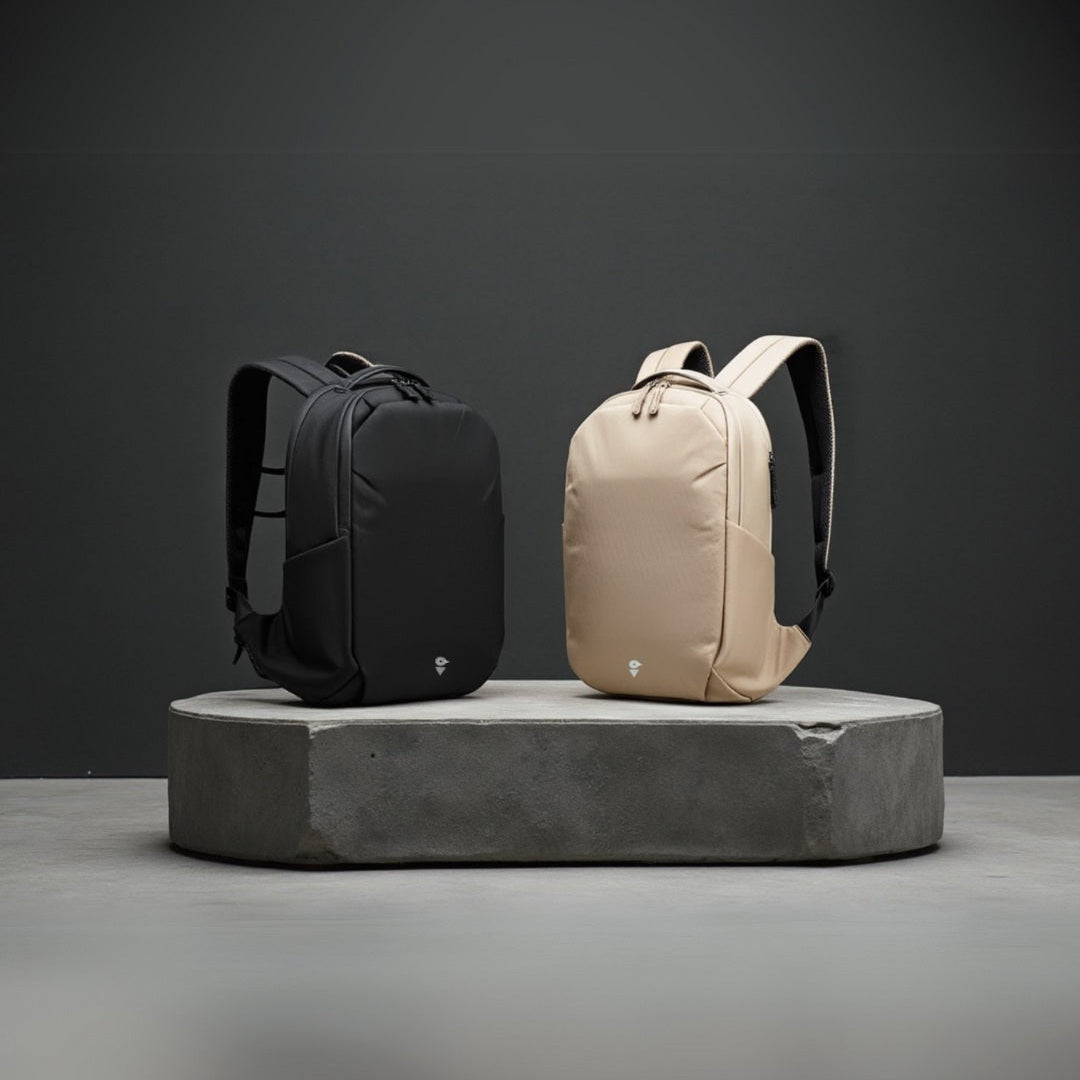
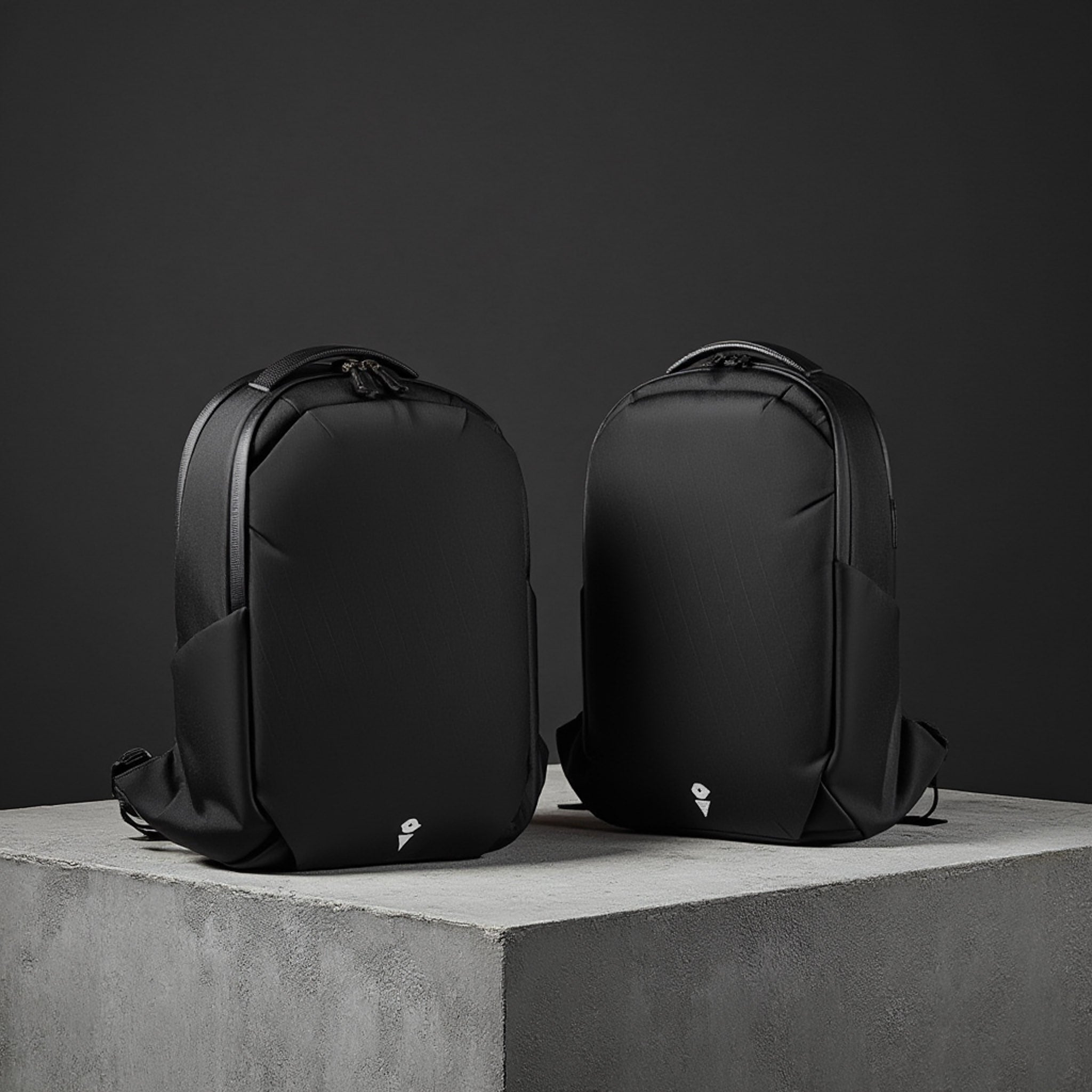
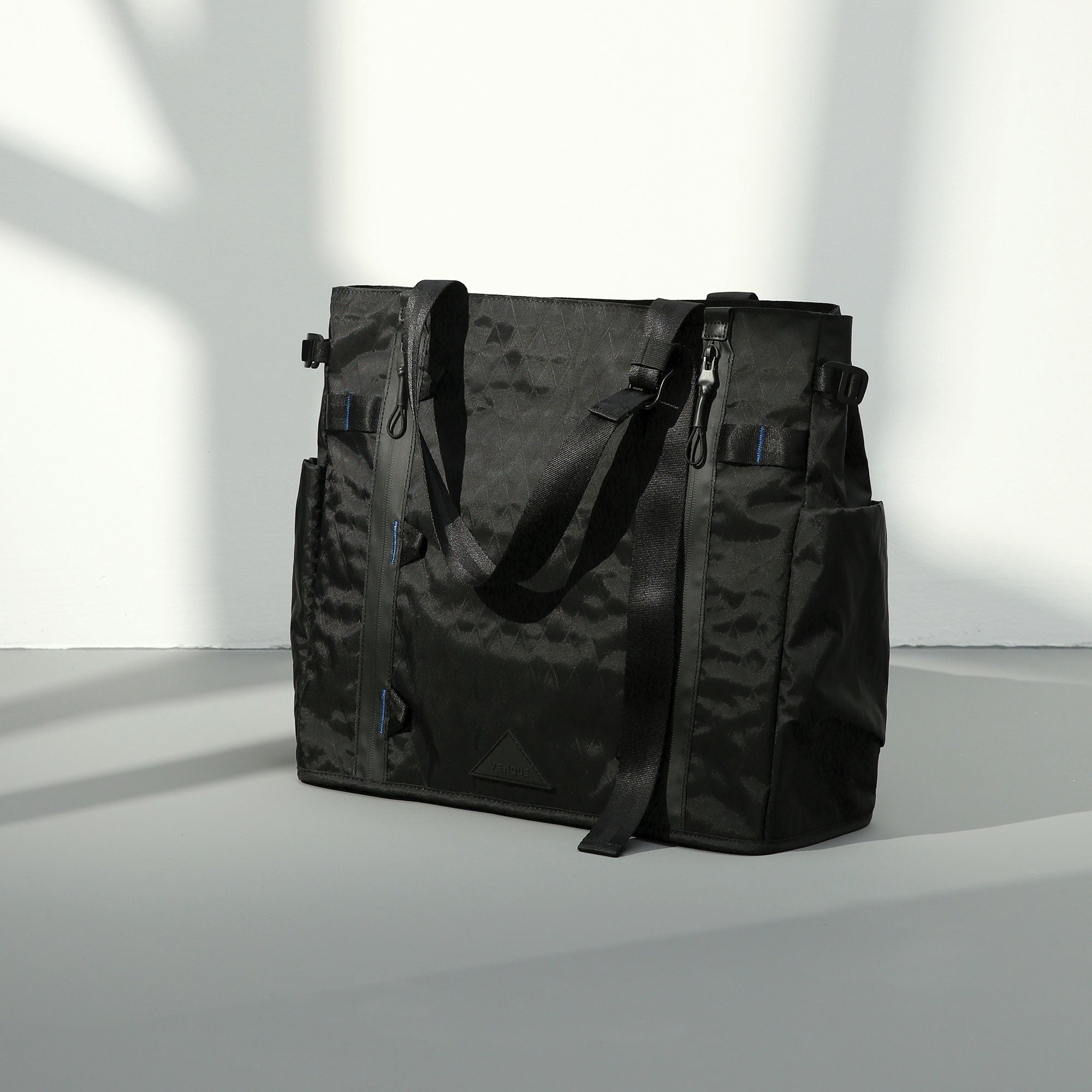
We'll start with our own, and we'll be upfront about which category we fall into. Venque is Canadian-owned and designed. We've been based in Toronto since 2011. Every bag is designed here, for the way people here actually live — commuting in slush, working hybrid, travelling carry-on only. Manufacturing uses an overseas supply chain, like nearly every technical bag brand on this list. Warranty, returns, and support are handled domestically.
Here's an honest look at the four pieces that anchor our range, so you can judge them against the brands below.
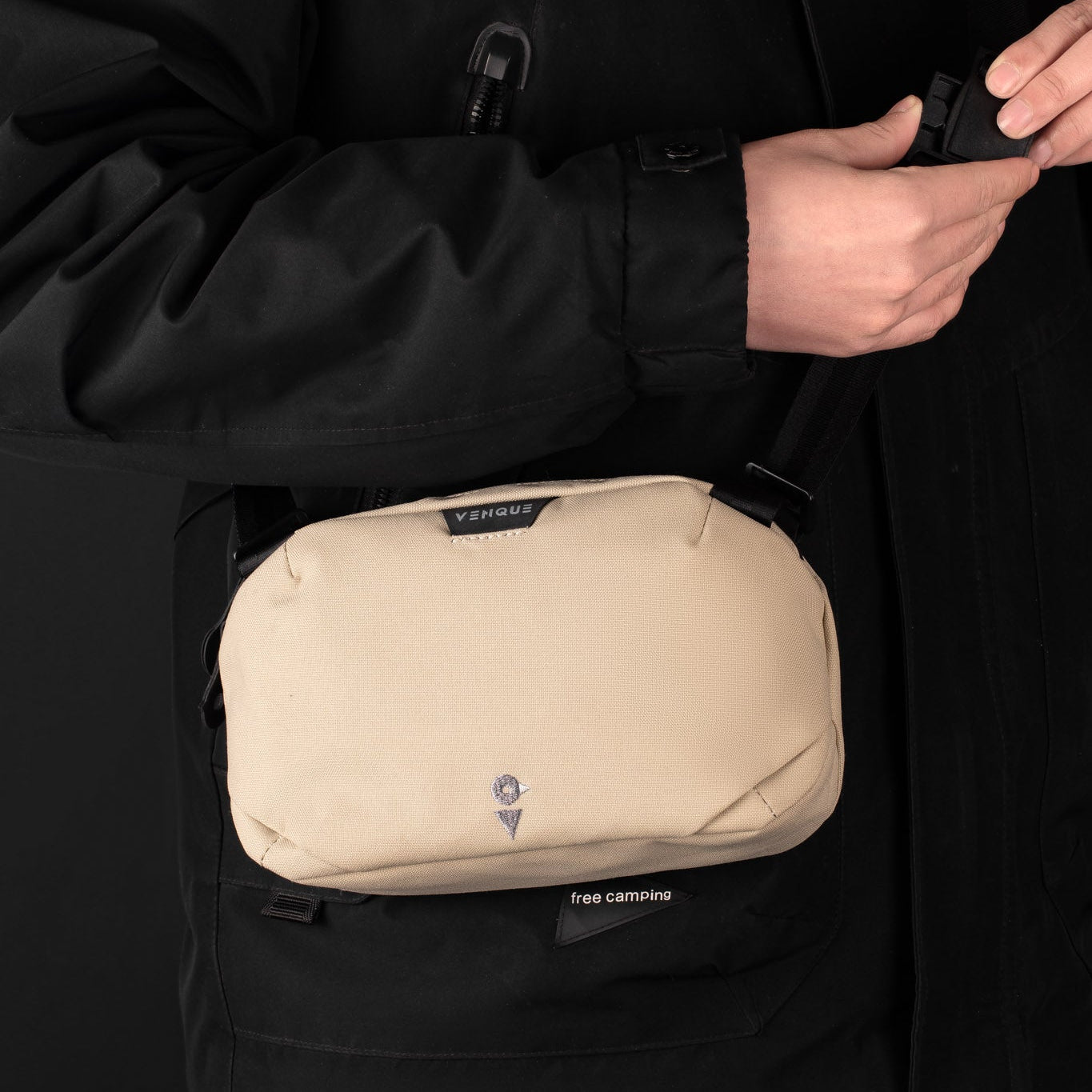
Transit Sling

Our bestselling bag. Expandable main compartment, anti-theft zippers, weather-resistant X-Pac shell. Designed to be worn across the chest, where it stays in front of you and in view — which is the entire point on a crowded subway platform.
- Works well — secure cross-body carry, weather-resistant shell, expands when you need it to
- Worth knowing — not sized for a laptop, and it's one main compartment. If you want heavy internal organisation, look at the Parker.
Parker Backpack 23L

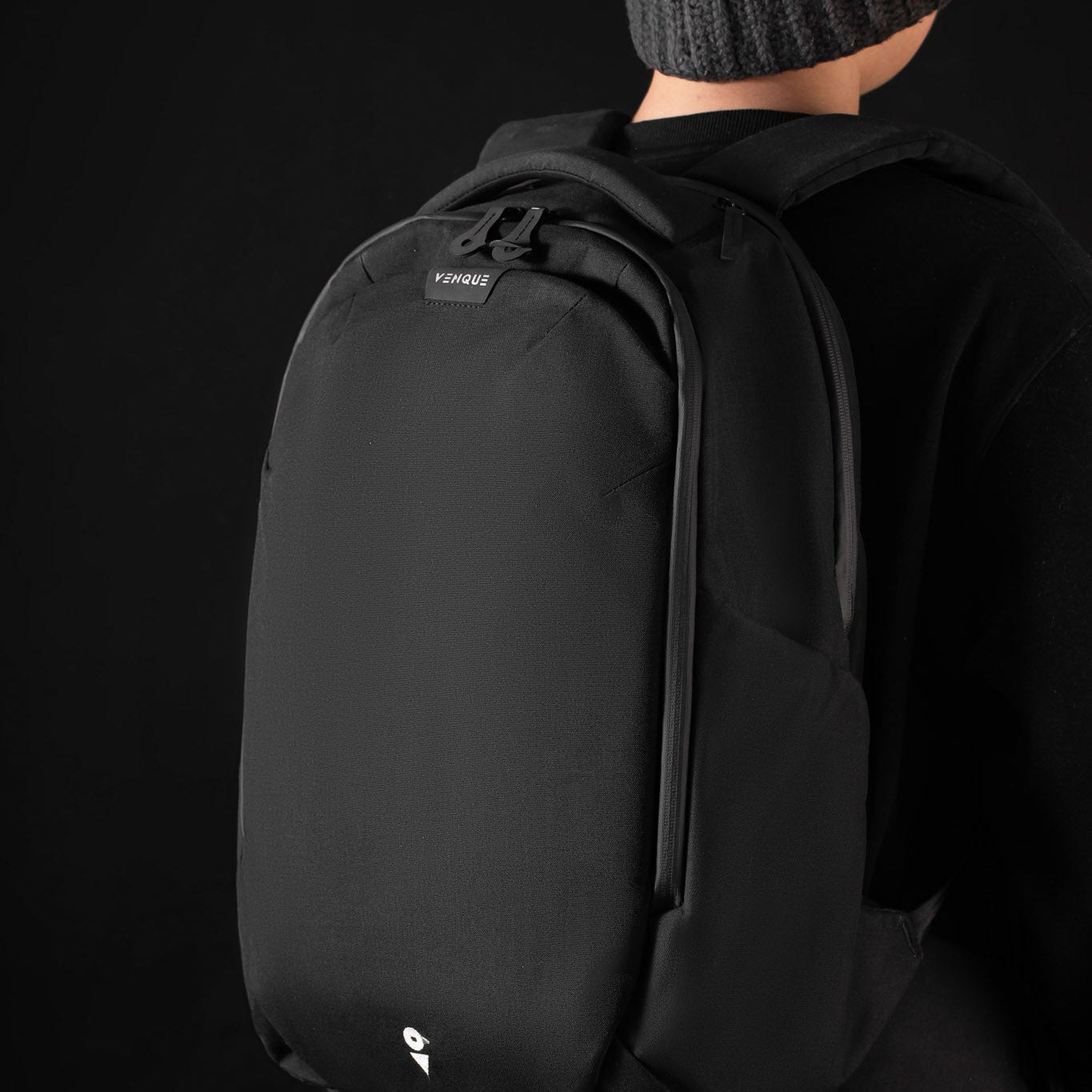
Clean, professional, quietly practical. A padded sleeve fitting up to a 15" laptop, a structured profile that holds its shape when half-empty, and understated styling that doesn't look out of place in a boardroom or on a Friday.
- Works well — professional look, real laptop protection, keeps its shape rather than slumping
- Worth knowing — structured means not packable. It won't compress into a suitcase, and it's built for daily carry rather than heavy travel.
FLAI Travel Backpack 40L

A 40L clamshell pack that fits most carry-on limits. Opens flat like a suitcase so you're not digging through a top-loader in a hostel, with a separate laptop sleeve and a removable hip belt for when there's real walking involved.
- Works well — carry-on compliant, clamshell packing, comfortable over distance with the belt on
- Worth knowing — snug past about three weeks of packing, and there's no external bottle pocket
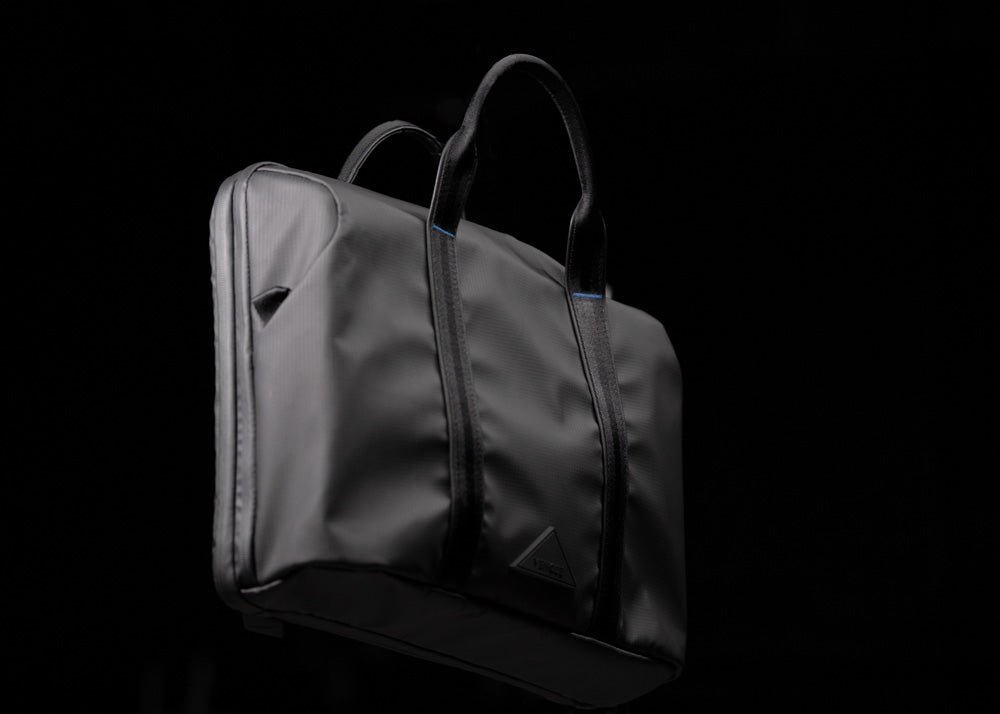
Workpod Executive Briefcase

Folds out into a mobile workstation and carries three ways — briefcase, shoulder bag, or backpack. Fits up to a 17" laptop. Built for hybrid professionals who are in a different building three days a week.
- Works well — genuinely versatile carry, fits large laptops, the fold-out desk is more useful than it sounds
- Worth knowing — it's a work bag first. Heavier and more formal than a daypack.
The other Canadian bag brands, honestly assessed
Four brands come up in every conversation about Canadian bags. They're all worth your attention, and none is trying to do what the others do. Here's where each genuinely sits.
Roots — the one that's actually made in Canada
If "made in Canada" is a literal requirement rather than a preference, Roots is the answer and the list gets short after that.
Roots still operates a leather factory in Toronto, run by three generations of the same family, and a meaningful portion of their leather goods are genuinely handcrafted there. The Banff Bag — the weekender that made the brand — is designed and built in that factory. The leather itself is Italian, sourced from tanneries certified by the Leather Working Group, but the cutting, stitching, and finishing happen in Toronto. Roots publishes which specific products are made domestically, which is more transparency than most brands offer.
Who it's for: buyers who want heritage leather that ages into something better, and who care about domestic manufacturing enough to pay for it. A Large Banff Bag runs $598 CAD.
The tradeoff: leather is heavy, it isn't weatherproof without maintenance, and there's no technical carry here — no engineered laptop protection, no weather-resistant shells, no travel organisation. This is a beautiful bag for a weekend away, not a commuter pack for a rainy Tuesday. The price reflects the labour, which is the honest cost of domestic manufacturing.
Arc'teryx — the technical benchmark, with an ownership footnote
Arc'teryx has been based in North Vancouver since 1989 and makes some of the most respected technical equipment in the world. The engineering philosophy behind their hardshell jackets goes into the bags too: if a feature doesn't perform, it doesn't ship.
The urban-facing lines are Granville, Mantis, and Arro. Granville is built around AC² construction — a bondable 420D fabric with laminated components, which lets them skip much of the traditional cut-and-sew seaming and produce a genuinely weatherproof bag without a rain cover. The Arro is the commuter pick, with a padded 15" laptop pocket and a WaterTight kangaroo pocket. Mantis is the lighter daypack line.
The ownership footnote: Arc'teryx is Canadian-founded and still headquartered in North Vancouver, with its design team in British Columbia. But the brand is owned by Amer Sports, the Helsinki-based group that has been majority-controlled since 2019 by a consortium led by Chinese sportswear company Anta Sports. Anta has deliberately preserved the operational identity of its acquired brands, so the design studio and headquarters remain where they were. If your definition of "buying Canadian" includes where the profits ultimately go, that's worth knowing.
Who it's for: people who hike, ski, or spend real time outdoors and want one bag that also handles the commute. The materials and hardware will outlast most of this list by years.
The tradeoff: price and over-specification. If your commute is a streetcar and an office, you're paying for alpine capability you will never use.
Herschel Supply — the style-first default
Founded in Vancouver and named after the small Saskatchewan town where the founders' family settled, Herschel built its identity on retro mountaineering styling — the striped liner, the drawstring-and-snap closure, the contrast straps. The Little America (30L) and the Retreat (23L) are the two you'll see everywhere.
Most of the range has moved to EcoSystem recycled fabrics, and it's backed by a limited lifetime warranty against manufacturing defects, which is genuinely good coverage at this price. The Little America 30L is $160 CAD.
Who it's for: students, and anyone who wants a good-looking bag at an accessible price without optimising for carry comfort or organisation.
The tradeoff: the design is style-led, and it shows under load. The signature drawstring closure is slower than a zip in the rain, and internal organisation is minimal — typically one large compartment plus a front pocket. Notably, straps are the single most-discussed issue in Herschel's own on-site reviews, with buyers split between finding them comfortable and finding them under-padded. It's a bag you buy for how it looks, and that's a perfectly valid reason.
Lululemon — the athleisure crossover
Vancouver-founded and Vancouver-headquartered, Lululemon moved into bags properly with the Everywhere Belt Bag, which became one of the most recognisable accessories of the decade. The range now spans belt bags, slings, totes, and backpacks across the Everywhere, City Essentials, and New Crew collections.
The strengths are real: lightweight materials, water-repellent finishes, and a design language that matches what a lot of people are already wearing. The Everywhere Belt Bag solved a genuine problem — hands-free carry for people who don't want a full bag.
Who it's for: gym-to-errands carry, and anyone already in the Lululemon ecosystem. Bags run roughly $48 to $188 CAD depending on size.
The tradeoff: these are activewear accessories, not carry gear. Laptop protection is a sleeve rather than a suspended, padded compartment. There's no anti-theft hardware, no travel organisation, and the fabrics prioritise weight and feel over abrasion resistance. At $78 CAD for a 6L sling, you're paying a brand premium over what the construction alone would command.
Best Canadian bags by type
Different needs, different bags. Here's how the Canadian options stack up across the four most-searched categories.
Best Canadian backpack
For daily commuting and work, a structured 20–23L pack hits the sweet spot — big enough for a laptop, lunch, and a layer, small enough not to bang into people on transit. The Venque Parker 23L and Transit Alpha 20L cover this, with Arc'teryx competing at the premium end and Herschel at the entry end. Full breakdown in our guide to the best Canadian backpack brands of 2026.
Best Canadian sling bag
Slings have taken over everyday carry, and the category now splits cleanly: Lululemon owns the athleisure end, Venque the functional end. The Transit Sling leads for anti-theft commuting. More options in our best sling bags guide.
Best Canadian work bag or briefcase
This is the thinnest category among Canadian brands — neither Herschel nor Lululemon really competes here, and Arc'teryx doesn't make a briefcase. The Venque Workpod Executive Briefcase is the most office-ready option, with Roots covering the traditional leather side.
Best Canadian travel bag
For carry-on travel, the FLAI 40L is the anchor — clamshell opening, carry-on compliant, hip belt for real walking. Arc'teryx's larger packs work if your travel is closer to trekking. For a full packing breakdown, see our best carry-on backpacks guide.
Canadian bag brand comparison
| Brand | Based in | Canadian status | Known for | Reference price |
|---|---|---|---|---|
| Venque | Toronto, ON | Canadian-owned & designed | Everyday carry, travel, work bags | See current pricing |
| Roots | Toronto, ON | Manufactures leather goods in Canada | Heritage leather bags and totes | $598 CAD — Large Banff Bag |
| Arc'teryx | North Vancouver, BC | Canadian-founded & headquartered, foreign-owned | Technical outdoor and commuter packs | Premium tier |
| Herschel Supply | Vancouver, BC | Canadian-owned & designed | Heritage-style backpacks | $160 CAD — Little America 30L |
| Lululemon | Vancouver, BC | Canadian-owned & designed | Athleisure slings, belt bags, totes | $48–$188 CAD across the range |
Competitor prices are current as of August 2026 and change frequently — check each brand's Canadian site before buying.
How to read this: all five are genuinely Canadian in identity, but they answer different questions. Choose Roots if domestic manufacturing is non-negotiable. Arc'teryx if you need technical performance and will actually use it. Venque for functional everyday carry at a mid-range price. Herschel if styling matters more than load-carrying. Lululemon for athleisure crossover.
Why buy Canadian in 2026
Beyond supporting homegrown design, the practical reasons have gotten more compelling.
Buying from a Canadian brand means no surprise cross-border duties at the door, faster domestic shipping, returns that don't involve international postage, and warranty service handled here. With continued tariff uncertainty affecting cross-border retail, buying domestic removes a real cost and a real hassle — the kind that turns a $200 bag into a $260 bag after a customs invoice you didn't expect.
There's also the design argument, and it isn't just marketing. A bag designed in Toronto or Vancouver is built by people who commute in slush, carry laptops through transit, and travel carry-on through Canadian airports in February. That context shows up in the details: weather-resistant materials as a default rather than an upgrade, closures that work with gloves on, and capacities sized for a country where you're carrying a layer nine months of the year.
Frequently asked questions
What is the best Canadian bag brand?
It depends on what you carry. For functional everyday carry — commuting, work, and carry-on travel — Venque is a strong Toronto-based pick at a mid-range price. For technical outdoor performance, Arc'teryx leads. For heritage leather genuinely made in Canada, Roots. For athleisure, Lululemon. The best brand is the one whose specialty matches your daily use.
Which Canadian bag brands are actually manufactured in Canada?
Roots is the main one, and only for specific leather product lines made at their Toronto factory. Most technical bag brands — including Venque, Herschel, and Arc'teryx — design in Canada but manufacture overseas, because the technical textile supply chain sits in Asia. If full domestic manufacturing is your requirement, check the individual product page rather than the brand.
Are Venque bags made in Canada?
Venque is a Toronto-based brand that has designed all of its bags in Canada since 2011. Like most technical bag brands, manufacturing uses an overseas supply chain for specialised materials, but design, warranty, and support are all Canadian. You buy, return, and get service domestically without cross-border friction.
Is Arc'teryx still a Canadian company?
Partly. Arc'teryx was founded in North Vancouver in 1989 and is still headquartered there, with its design team in British Columbia. However, it is owned by Amer Sports, a Helsinki-based group that has been majority-controlled since 2019 by a consortium led by Chinese sportswear company Anta Sports. Arc'teryx remains Canadian in origin, headquarters, and design — but not in ownership.
Which Canadian brand makes the best work bag?
For hybrid professionals, the Venque Workpod Executive Briefcase is the most office-ready Canadian option — it folds into a workstation and offers three-way carry for laptops up to 17". For a backpack-style work bag, the Venque Parker 23L is the everyday pick. Roots covers traditional leather, and neither Herschel nor Lululemon really competes in this category.
Is it worth buying a Canadian bag brand over an international one?
For Canadian buyers in 2026, generally yes. You avoid cross-border duties, get faster domestic shipping, and handle returns and warranty locally. With tariff uncertainty on cross-border retail, buying domestic removes cost and hassle. You also get bags designed for Canadian conditions rather than adapted to them.
Built in Toronto, for the way you carry
Explore the full Venque range — backpacks, slings, totes, briefcases, and travel bags.