



You packed perfectly at home. Shirts folded flat, trousers creased sharp, everything neat. Then you unzip your bag at the hotel and everything looks like it spent 10 hours fighting for space — because it did. Wrinkles in travel clothes are one of the most avoidable frustrations in travel, and the fix isn't expensive wrinkle-release spray or an iron in every hotel room. It's how you pack.
This guide covers every method that actually works — from the bundle packing technique used by professional packers to the tissue paper trick tailored dressers have used for decades. Use one method, or combine them. By the end you'll know exactly how to arrive anywhere looking like you didn't just spend 9 hours in a middle seat.
Why clothes wrinkle when you pack them
Wrinkles form when fabric fibres are compressed in one position for an extended period. The longer the compression and the more heat and moisture involved (like a warm luggage hold), the deeper the crease sets. Natural fibres like cotton and linen wrinkle easily because their fibres have less memory — they stay where they're bent. Synthetic fibres like polyester and nylon spring back because their fibres are more elastic.
The practical implication: packing method matters more for natural fibres, and fabric choice matters if you want to pack light without worrying about it at all.
✅ Wrinkle-resistant fabrics
- Merino wool
- Polyester blends
- Nylon (most bags)
- Lycra / spandex blends
- Jersey knit
- Performance fabrics
⚠️ Wrinkles easily
- 100% cotton (especially dress shirts)
- Linen
- Rayon / viscose
- Silk
- Structured blazers
- Dress trousers (wool)
7 methods to pack clothes without wrinkles
Bundle packing
Bundle packing is the most effective wrinkle-prevention method for a full wardrobe. Instead of folding clothes individually, you wrap each item around a central core — usually a soft item like a rolled t-shirt, toiletries bag, or packing cube. The logic: there are no fold lines because nothing is folded. The fabric wraps in smooth curves around the bundle, and the tension distributes pressure evenly across the whole garment.
How to do it: lay your largest, most wrinkle-prone item flat (a dress shirt or blazer), then layer each successive item on top, alternating the direction. Place your core item in the centre, then fold each layer back over it, starting with the last item you placed. The result is a tight, self-compressed bundle.
Best for: dress shirts, blazers, trousers, dresses — anything structured that would crease badly if folded flat.
Rolling
Rolling works well for casual clothes — t-shirts, jeans, shorts, underwear, and knitwear. Tightly rolled clothes take up less space than flat-folded items and the rolling motion means the crease, if any, runs in a consistent direction that relaxes quickly once unpacked.
How to do it: lay the item flat, fold it in thirds lengthwise (for shirts), then roll tightly from the bottom hem upward. The tighter the roll, the less likely it is to come undone and unfold in transit.
Best for: t-shirts, jeans, casual trousers, knitwear, towels. Not ideal for structured dress shirts or jackets — bundle pack those instead.
Tissue paper interleaving
The technique tailors and dry cleaners use when returning pressed clothes. Sheets of acid-free tissue paper placed between each garment layer reduce friction — and it's friction between fabric layers, not just pressure alone, that deepens wrinkles. A sheet of tissue absorbs the micro-movement between fabrics and prevents the fibres from catching against each other in transit.
How to do it: fold your shirt or garment as you normally would, then place one or two sheets of tissue paper between each fold before placing it in your bag. For dress shirts, fold with the tissue inside each collar, cuff, and across the back panel.
Best for: dress shirts, silk blouses, tailored trousers, delicate fabrics. One packet of tissue paper weighs almost nothing and handles an entire wardrobe.
Packing cubes
Packing cubes don't prevent wrinkles on their own — but they maintain the organisation you create when packing, preventing clothes from shifting and re-wrinkling in transit. A shirt rolled tightly and placed in a packing cube stays rolled. A shirt loosely folded in an open suitcase gets shuffled, compressed unevenly, and arrives creased. The cube is the container that preserves the method.
How to do it: roll or bundle your clothes first using the methods above, then pack them into packing cubes by category — tops in one, bottoms in another, underwear in a third. Compress the cubes until firm but not bulging.
Best for: anyone who opens their bag multiple times during a trip, or who shares a bag with a partner. The cubes mean you can pull out one category without disturbing everything else.
Dry cleaning bags
The trick every travelling professional swears by: leave dress shirts and suit jackets in the thin plastic dry cleaning bags from the cleaner. The slippery plastic eliminates friction between garment layers completely — the fabric slides rather than catching — and shirts arrive almost as pressed as when they went in.
How to do it: keep shirts and jackets on their hangers inside the plastic bag, fold in thirds (hanger included), and lay flat in the bag. The plastic bag acts as a frictionless layer between the fold and the bag lining.
Best for: fresh dry-cleaned items, suits, structured blazers, any garment you absolutely cannot have creased on arrival. Free with every dry cleaning visit.
Wear your heaviest items
The simplest method of all: clothes that are worn can't wrinkle in transit. Your heaviest jacket, your bulkiest jumper, your thickest jeans — all go on your body for the travel day. This isn't just a packing tip, it's a weight strategy. Wearing your heaviest items frees 1.5–2 kg of bag capacity for everything else, and everything that remains in the bag is lighter and easier to pack without wrinkles.
Best for: jackets, heavy knitwear, jeans, boots. Especially effective on flights where the overhead bin is cold and you'd want a layer anyway.
Hang and steam in the bathroom
Already arrived with wrinkled clothes? Hang the garment on a hanger in the bathroom, close the door, run the shower on its hottest setting for 5–10 minutes, and leave the room. The steam relaxes fabric fibres and gravity pulls the wrinkles out. For most fabrics this removes 80–90% of travel creases within 15 minutes without touching the garment.
How to do it: hang the garment as high as possible (shower rod or hook behind the door), don't let it get wet — keep it away from the direct spray. Close the bathroom door to trap the steam. More effective on natural fibres than synthetics.
Best for: emergency situations, linen and cotton that arrived badly creased, any garment you can't iron. Works in any hotel room with a shower.
Which method to use for each type of clothing
| Garment | Best method | Backup method |
|---|---|---|
| Dress shirts | Bundle packing + tissue paper | Dry cleaning bag |
| T-shirts | Roll tightly | Bundle packing |
| Jeans | Roll (they're the core of the bundle) | Wear on travel day |
| Blazer / jacket | Wear on travel day | Dry cleaning bag, folded inside-out |
| Trousers / chinos | Bundle packing | Roll lengthwise |
| Dresses | Bundle packing around a core | Tissue paper + flat fold |
| Silk / delicate fabrics | Tissue paper interleaving | Bundle packing (outermost layer) |
| Knitwear / jumpers | Roll loosely | Bundle core item |
| Linen | Bathroom steam on arrival | Tissue paper + roll |
| Underwear / socks | Roll into balls, fill shoes and gaps | Packing cube |
The bag matters as much as the method
Even the best packing technique fails in the wrong bag. A top-loading bag that requires you to excavate everything to reach the bottom means your clothes get disturbed and re-compressed every time you access the bag. A bag without structure collapses on itself, concentrating pressure unevenly. And a bag that's too large means clothes shift in transit — the movement creates friction that sets wrinkles in.
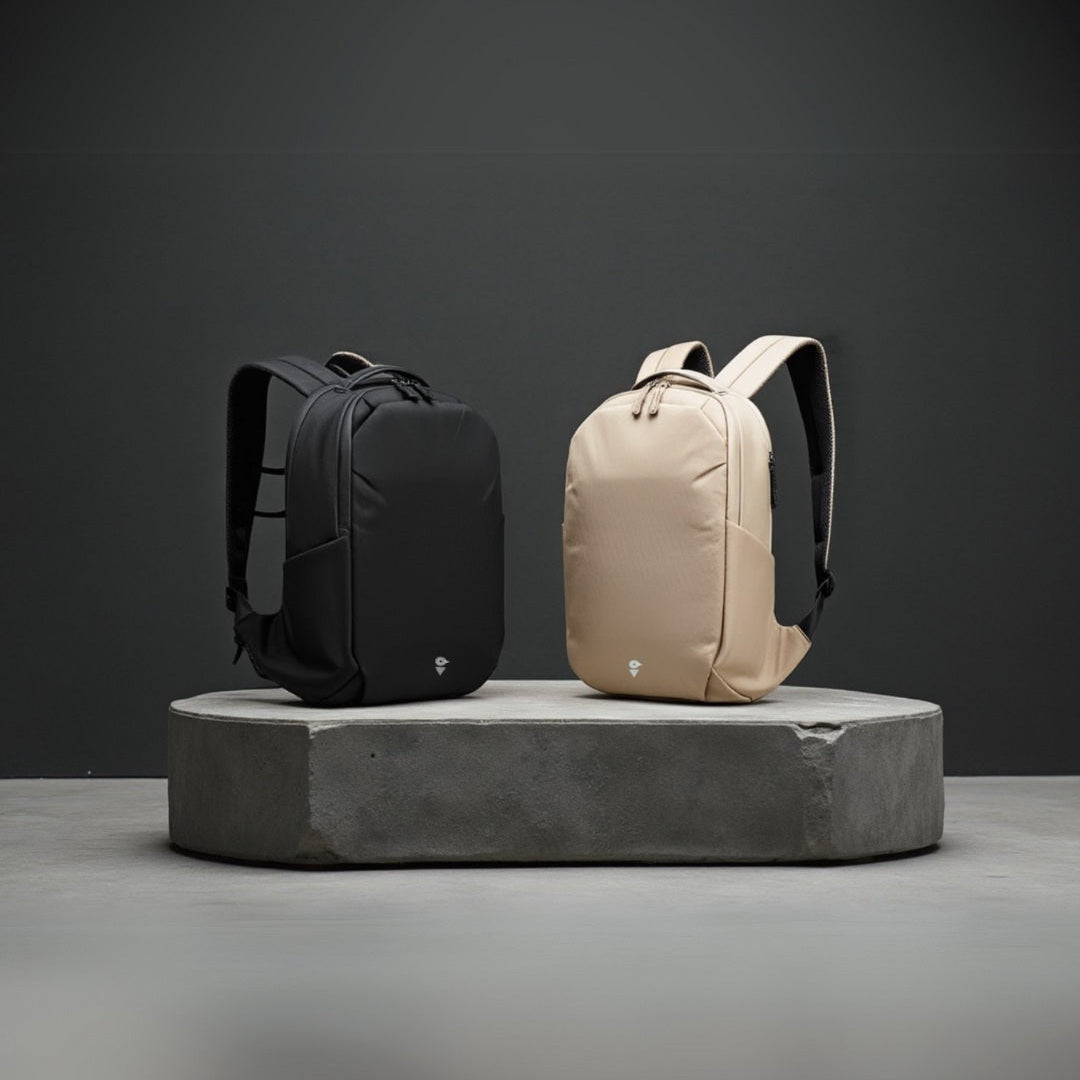
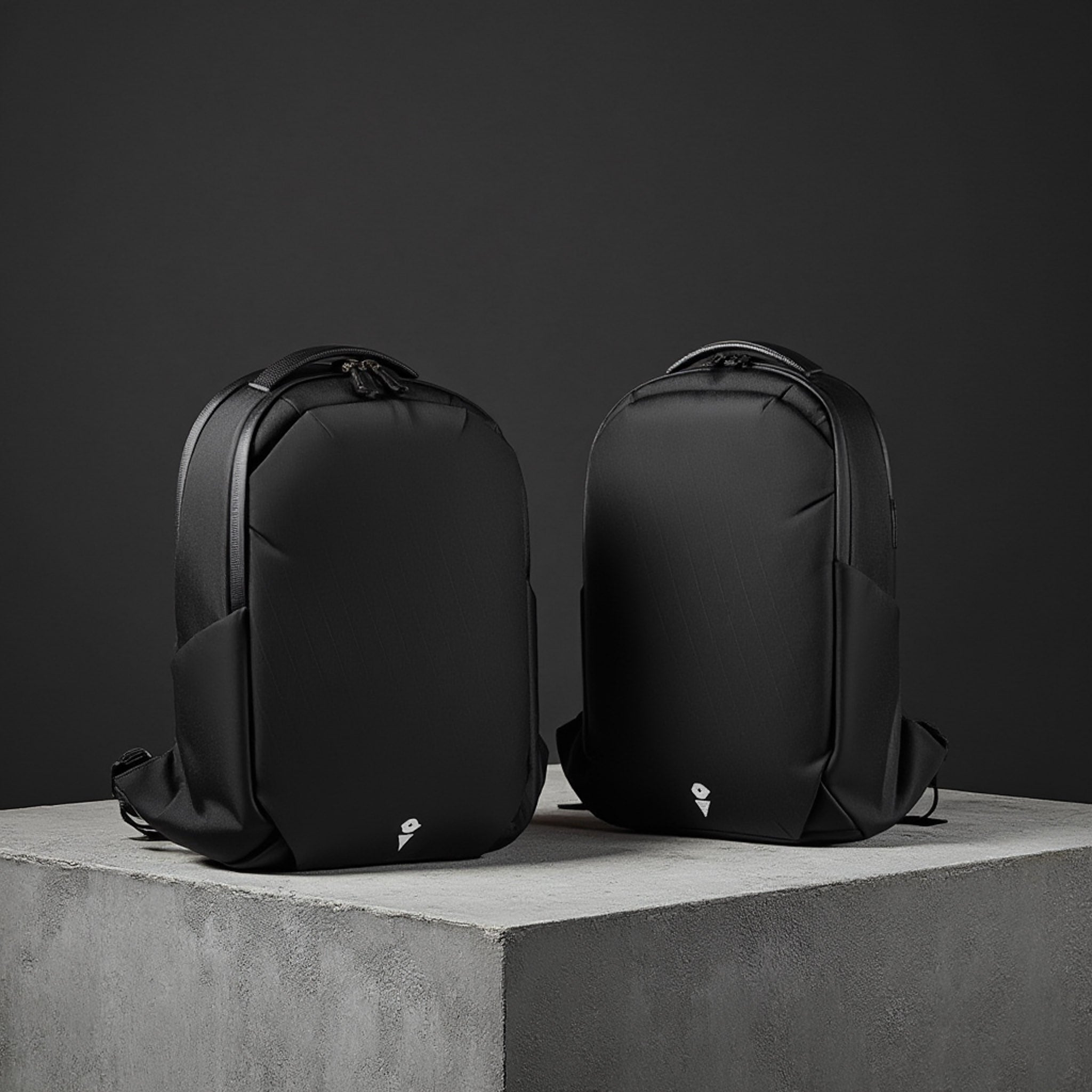
The ideal wrinkle-free packing bag has three features: a clamshell opening so you can access clothes without disturbing everything else, a structured frame that holds its shape under full load, and a capacity that matches what you're carrying — not so large that things shift around.
Venque FLAI 40L — Best Bag for Wrinkle-Free Packing
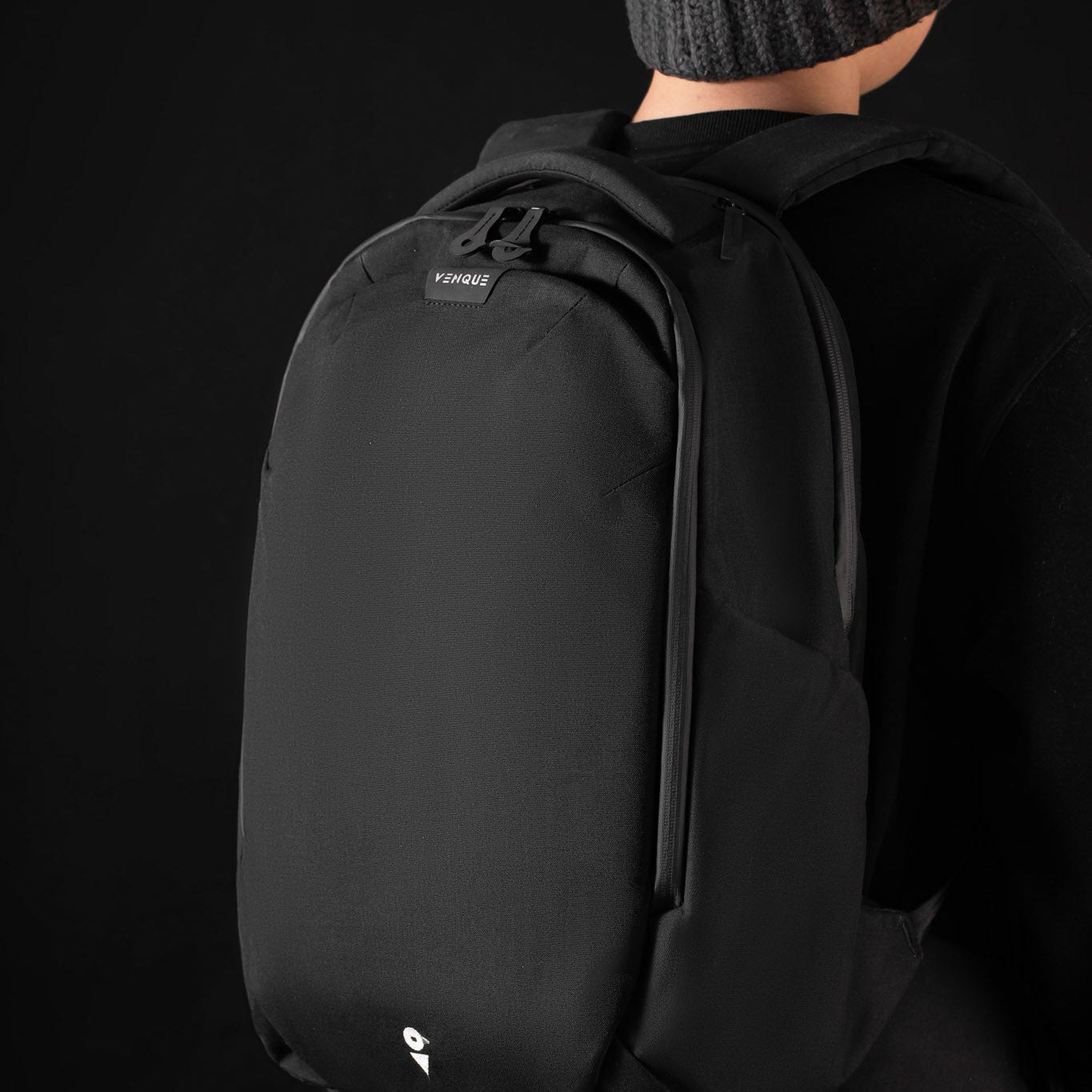
40LClamshell openingBuilt-in packing boardThe FLAI 40L opens completely flat like a suitcase — no digging from the top — and has a built-in packing board that keeps your bundle or rolled clothes flat and compressed against a rigid surface. That board is the key difference: it prevents the bag from collapsing inward and concentrating pressure on one spot, which is what causes wrinkles to set in transit.
It's also airline-compliant as a carry-on on Air Canada, WestJet, United, and Delta — so your clothes never go into a hot cargo hold where heat and humidity accelerate wrinkle-setting.

Venque Transit Alpha 20L — Best for Weekend Trips
20LPersonal item sizeUrban + travelFor 2–3 day trips, the Transit Alpha at 20L is the right size — large enough for a rolled capsule wardrobe, small enough to keep clothes compressed and stable throughout transit. Fits under the seat on most airlines as a personal item, which means your clothes stay in the cabin with you, not in a checked bag getting jostled in the hold.
Fabric choices that make everything easier
The biggest upgrade to wrinkle-free travel isn't a packing technique — it's building a travel wardrobe from wrinkle-resistant fabrics. Once you own 5 merino wool t-shirts and a polyester-blend chino, the packing method becomes almost irrelevant.
Merino wool is the gold standard. It's naturally wrinkle-resistant, temperature-regulating (warm when cold, cool when warm), odour-resistant for 2–3 wears between washing, and looks equally appropriate in a casual restaurant and a business meeting. The downside is cost — a good merino t-shirt runs $80–150. The upside is you own 3 t-shirts for a 2-week trip instead of 7.
Performance polyester blends (like the fabrics used in Lululemon or Arc'teryx) are wrinkle-proof, quick-dry, and packable. Less versatile aesthetically for formal settings, but genuinely maintenance-free for casual and active travel.
Jersey knit (most standard t-shirts with some stretch) resists wrinkles better than woven cotton because the knit structure has inherent elasticity that bounces back after compression.
✅ The complete wrinkle-free packing checklist
- Choose wrinkle-resistant fabrics where possible (merino, polyester blend, jersey)
- Bundle pack structured items — dress shirts, blazers, trousers, dresses
- Roll casual items tightly — t-shirts, jeans, knitwear
- Use tissue paper for silk, delicate fabrics, and freshly dry-cleaned items
- Wear your heaviest layer on travel day
- Use packing cubes to maintain organisation and prevent shifting
- Choose a bag with a clamshell opening and internal structure
- Don't overpack — a bag that's too full compresses everything harder
- Keep the bag as a carry-on when possible — no cargo hold, no heat
- Unpack immediately on arrival and hang garments — gravity does the rest
Frequently asked questions
- What is the best way to pack clothes without wrinkles?
- Bundle packing is the most effective single method for a full wardrobe — it eliminates fold lines entirely by wrapping clothes around a central core. For casual clothes, rolling tightly is fast and effective. For delicate fabrics, tissue paper interleaving prevents friction between layers. Most experienced travellers combine all three depending on the garment type.
- Does rolling clothes prevent wrinkles?
- Yes, for casual clothes. Rolling works because the crease runs consistently along the roll rather than across a flat fold, and it relaxes quickly once the item is unrolled. Rolling is less effective for structured garments like dress shirts and blazers — use bundle packing or tissue paper for those.
- Does tissue paper prevent wrinkles when packing?
- Yes — tissue paper reduces friction between fabric layers, which is one of the main causes of wrinkle formation in transit. Place one or two sheets between each fold of structured items. This technique is used by tailors and dry cleaners for a reason — it genuinely works.
- How do you pack a dress shirt without wrinkles?
- Two methods work best. First, bundle packing — use the dress shirt as the outer layer of the bundle, wrapping it around a core of softer items. Second, the dry cleaning bag method — keep the shirt in its plastic dry cleaning sleeve, fold in thirds, and lay flat. The plastic eliminates friction. For extra insurance, add tissue paper inside the collar and cuffs.
- How do you get wrinkles out of clothes after travel?
- The fastest method without an iron: hang the garment in the bathroom, close the door, and run the shower on hot for 5–10 minutes. The steam relaxes the fibres and gravity removes the crease. Alternative: use a wrinkle-release spray (diluted fabric softener in a spray bottle works) and smooth the garment by hand while slightly damp.
- Do packing cubes help with wrinkles?
- Packing cubes help prevent re-wrinkling by keeping clothes organised and stable during transit. They don't prevent wrinkles on their own — you still need to roll or bundle correctly — but they maintain that organisation and stop clothes shifting in the bag, which is what causes wrinkles to set between folded layers.
- What fabrics travel without wrinkling?
- Merino wool, polyester blends, jersey knit, nylon, and performance synthetics all travel wrinkle-free. Merino wool is the best overall travel fabric — wrinkle-resistant, odour-resistant for multiple wears, and temperature-regulating. Linen and 100% cotton wrinkle the most easily and require the most careful packing technique.
- How do you pack linen without wrinkles?
- Linen is the hardest fabric to pack without wrinkles. Your best options: use tissue paper between folds, pack linen as the outermost layer of a bundle (it will wrinkle less than if buried inside), and plan on using the bathroom steam trick immediately on arrival. Alternatively, embrace it — linen's casual wrinkling is part of its aesthetic and many people consider slightly wrinkled linen acceptable.
Pack smarter, arrive better
The FLAI 40L's clamshell opening and built-in packing board make it the best bag for wrinkle-free packing. Airline-compliant carry-on on all major carriers. Free shipping at venque.com.
Shop the FLAI 40L →